Tower House
The Towers in the Village
Home " Places of interest " 13 The Towers in the Village
🎧 Listen to the guide (Italian)
🎧 Listen to the guide (English)
🎧 Écoutez la guide (Français)
🎧 Escucha la guía (Español)
🎧 Hör dir die Führung an (Deutsch)
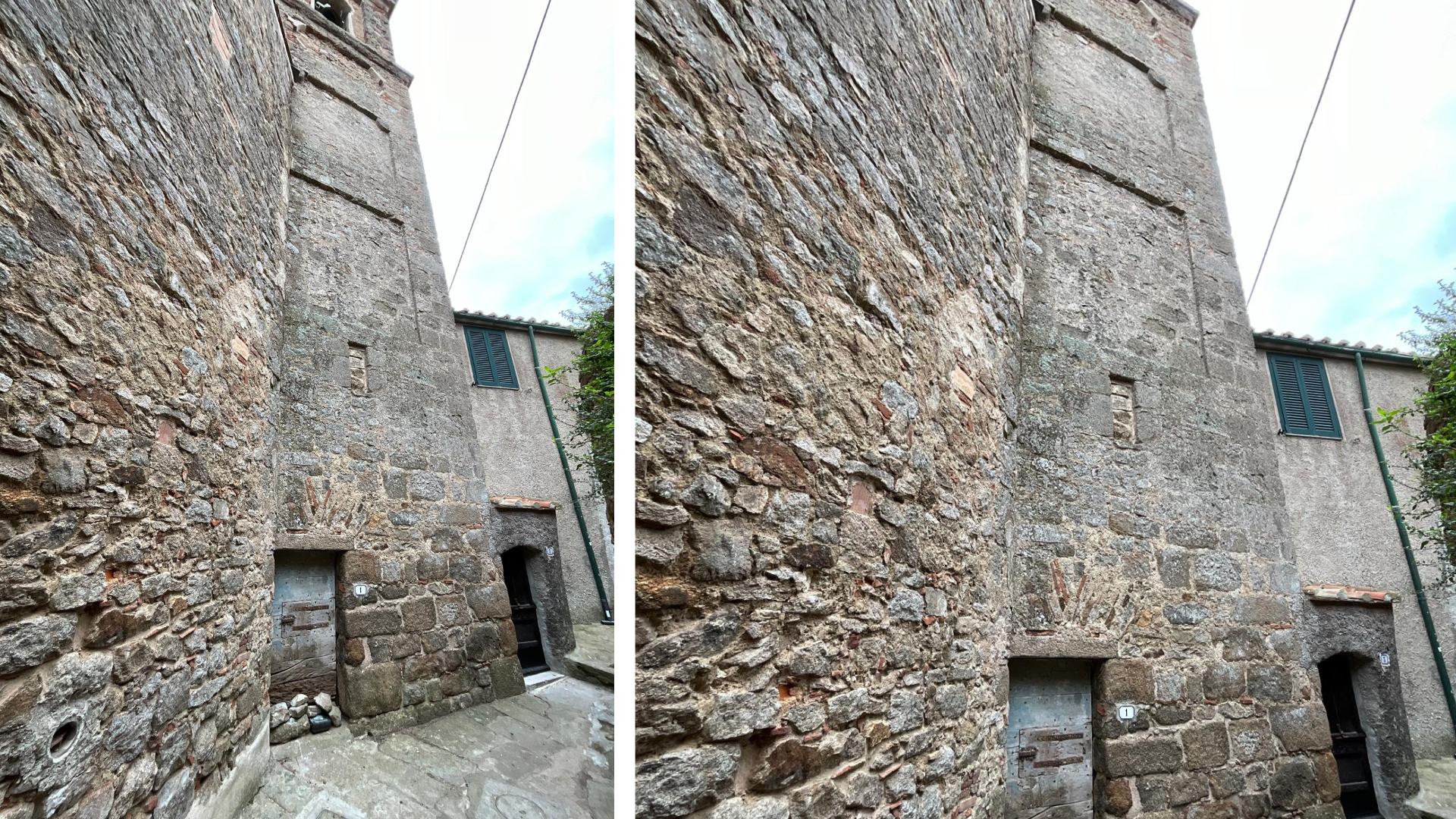
Another feature of great interest at the parish is the present bell tower, which was incorporated with the church 's renovations because it has a totally different orientation than both the modern church and the Romanesque masonry.
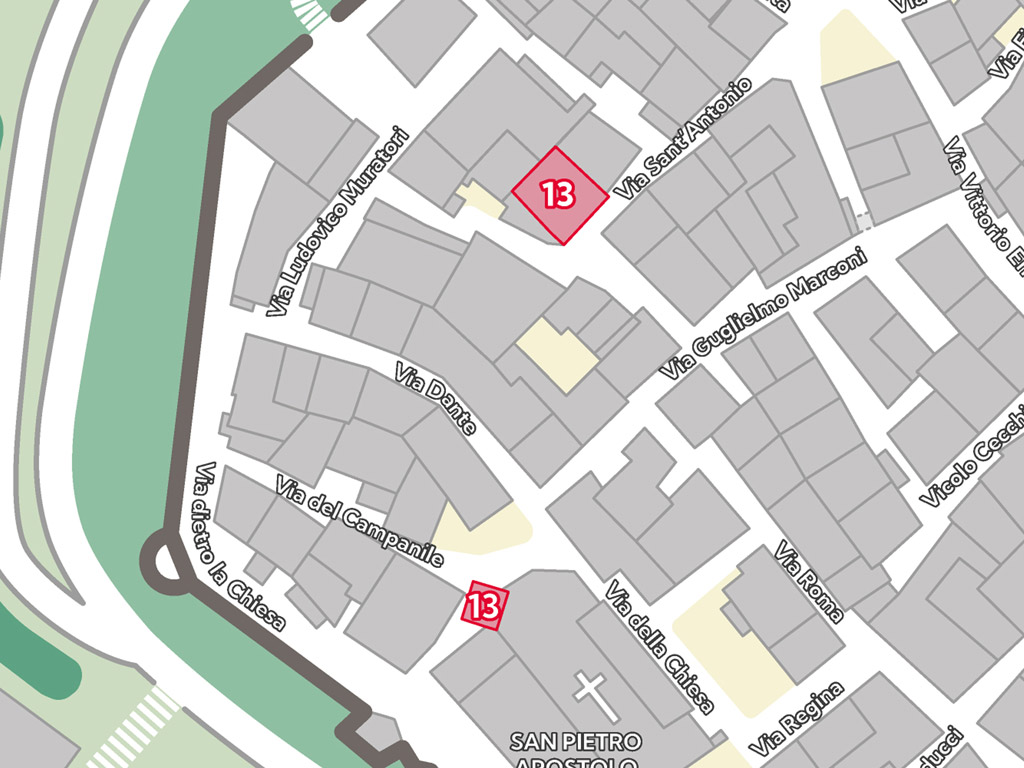
It is a tower about 3 m on a side with narrow single lancet window on the east side that does not look to be pertinent to the early phase of the church.
As in the case of San Giorgio in Grosseto, we could think of a tower house near the first church that was later used as a bell tower(Gabbrielli 2007).
At present, however, the full details of the relationship between the two buildings elude.
In Grosseto, excavations have shown the presence of a church at least two centuries older than the tower.
The absence of research at the Giglio castello does not allow us to go beyond a simple hypothesis.
However, we should note that Grosseto was in fact already a city even though the tower possibly predates the translation of the bishop's seat, while the Giglio castello always remained a castle.
So the tower in question may actually be part of the 12th-century castle wall circuit.
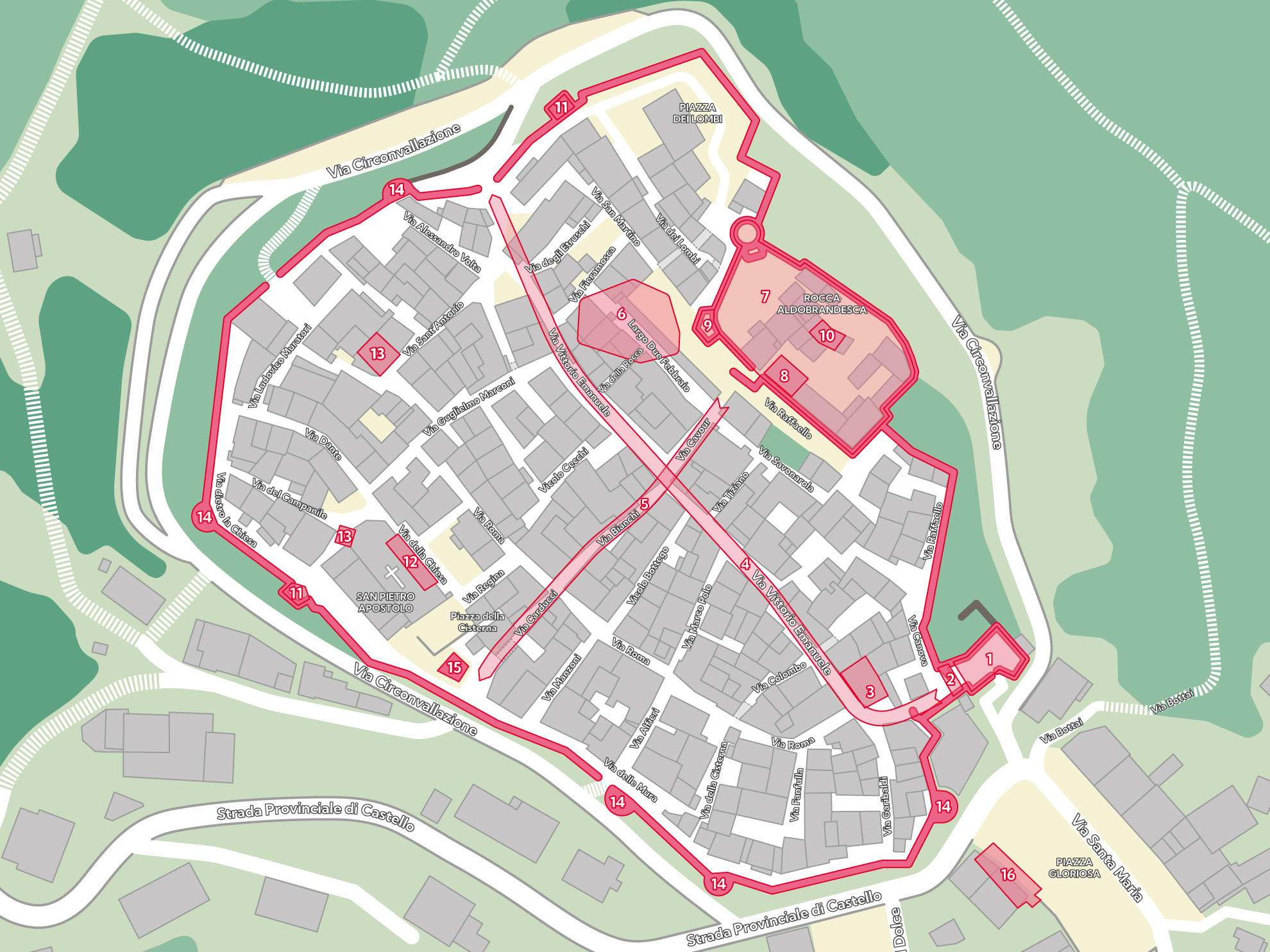
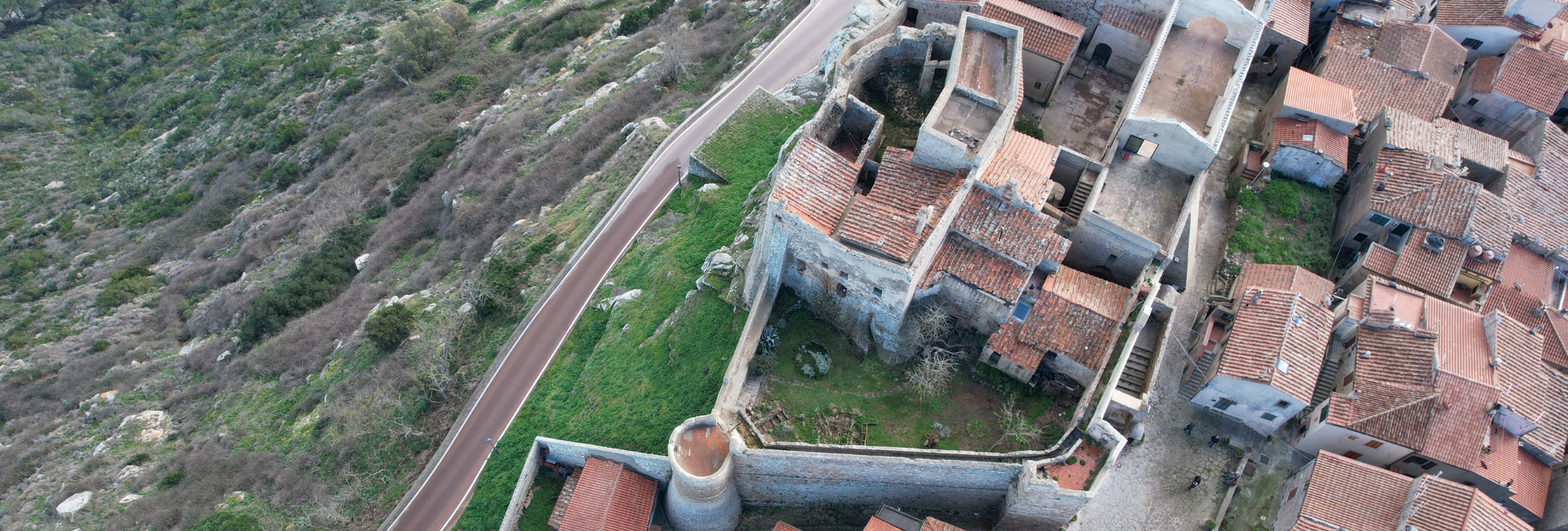
A map from the mid-18th century(Guarducci et al. p. 229) shows another square tower in the northeastern portion of the castle, isolated from other buildings and on a rocky outcrop (judging by the symbolism surrounding the square, quite identical to the crags below the outer walls). But the same tower can be found on another older map dated to the second half of the 16th century and preserved in the Florence State Archives under the heading tower to be restored.
This map cannot be georeferenced accurately, however we seem to be able to still catch in the 1823-35 cadastre the parcel (number 68) that should correspond to this building by then already incorporated into the building fabric. Only a very small portion of the masonry emerges from the recent plaster and we seem to catch a few square stone ashlars. It is little, but a tower so internal to the late medieval wall circuit makes little sense.
If this were true we would have a building of about 6 m on a side, thus a building of special significance. In contrast, the tower is clearly visible in another map of the castle dated to the second half of the 16th century, where it appears as the only element related to fortifications within the city walls with the words to be restored.
Purely as a guess, we could imagine that both were pertinent to the 12th-century castle fortification system.