The fortification of the Giglio Castello
The Rock
Home " Places of interest " 7 The Rock
🎧 Listen to the guide (Italian)
🎧 Listen to the guide (English)
🎧 Écoutez la guide (Français)
🎧 Escucha la guía (Español)
🎧 Hör dir die Führung an (Deutsch)
The cadastre drawn up by the Lorraines between 1823 and 1835 for all of Tuscany under their jurisdiction also included the island of Giglio.
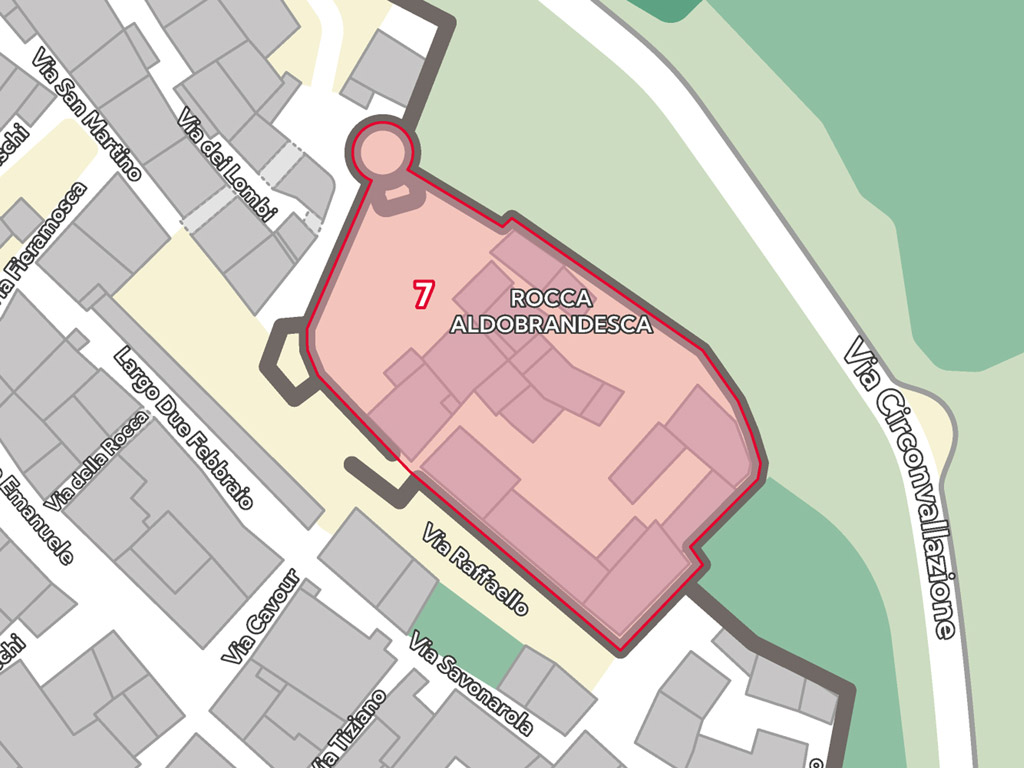
From this valuable and precise cartographic tool, we can extract some elements of evaluation on the possible structure of the settlement in the Middle Ages.
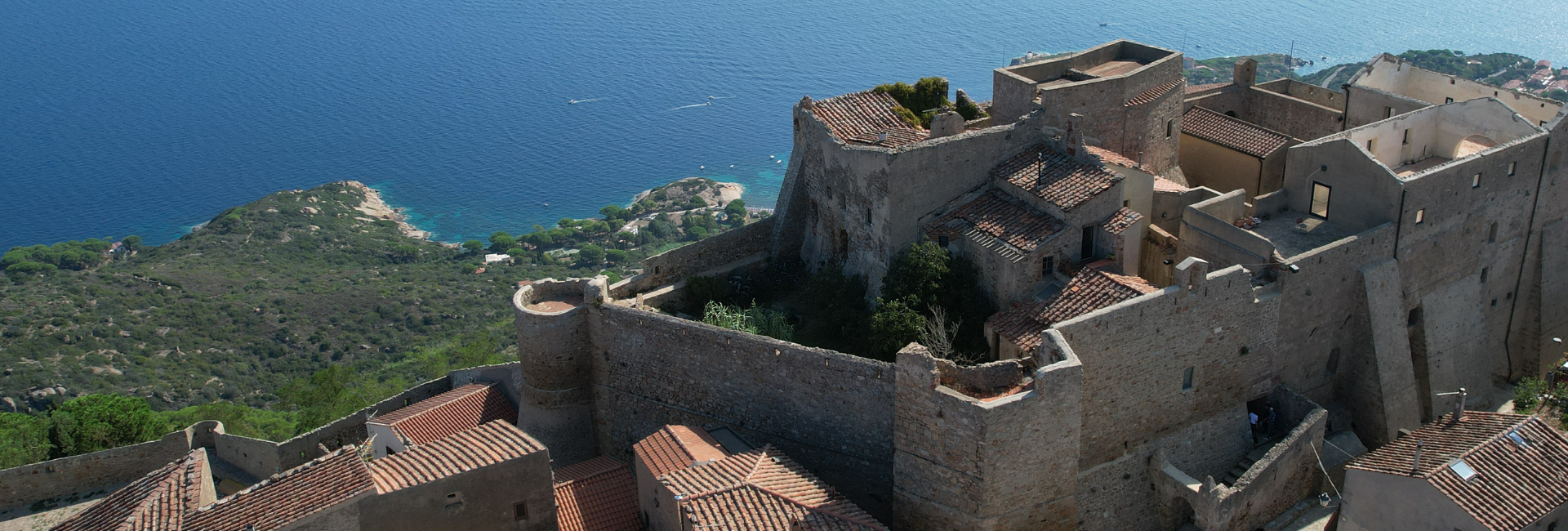
The area of the fortress must not have been very dissimilar to what we see today although it is not the highest part of the hill.
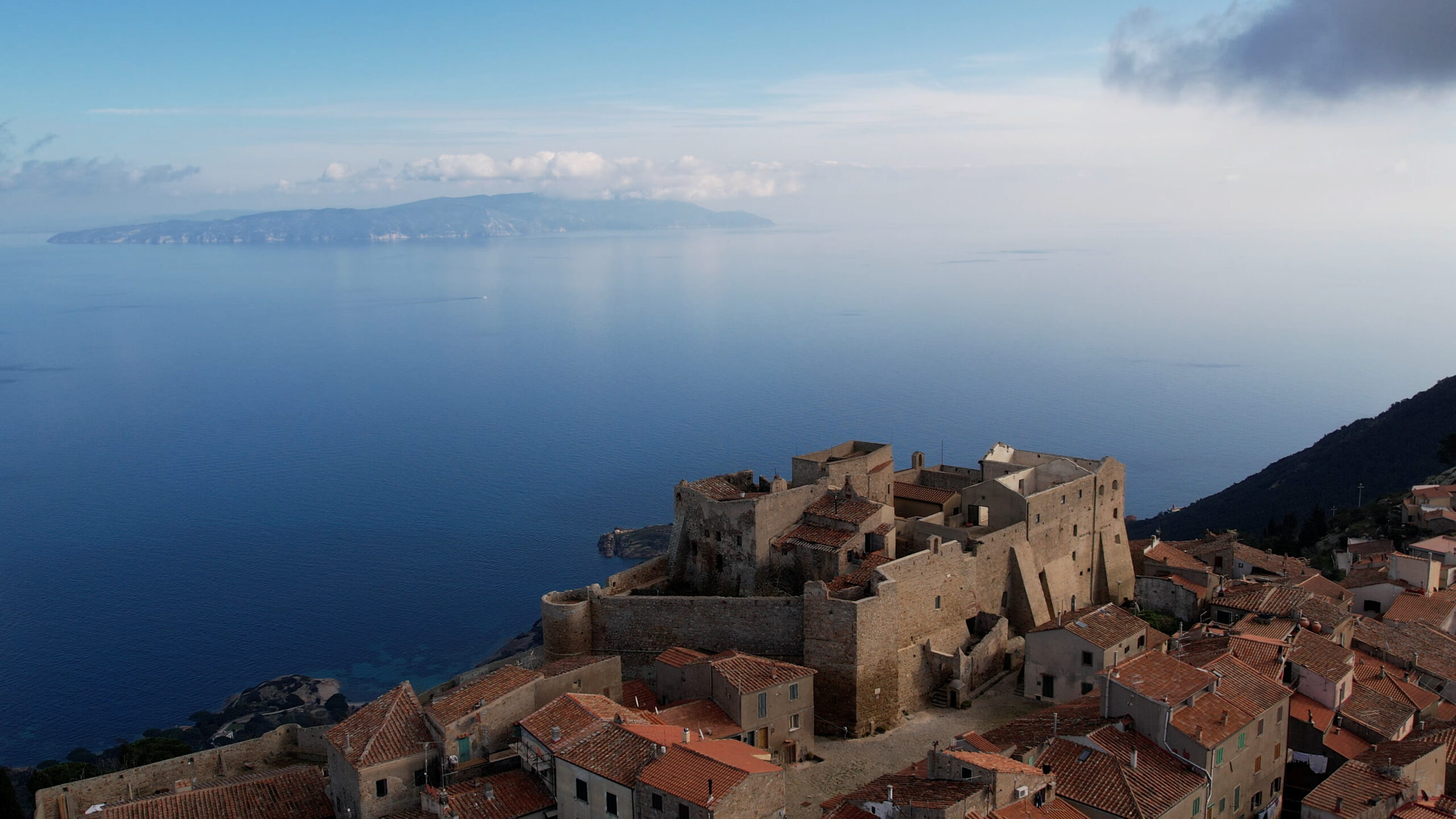
We have no information on the extent and course of the wall to the summit area and the two 12th-century churches, but we do have some clues.
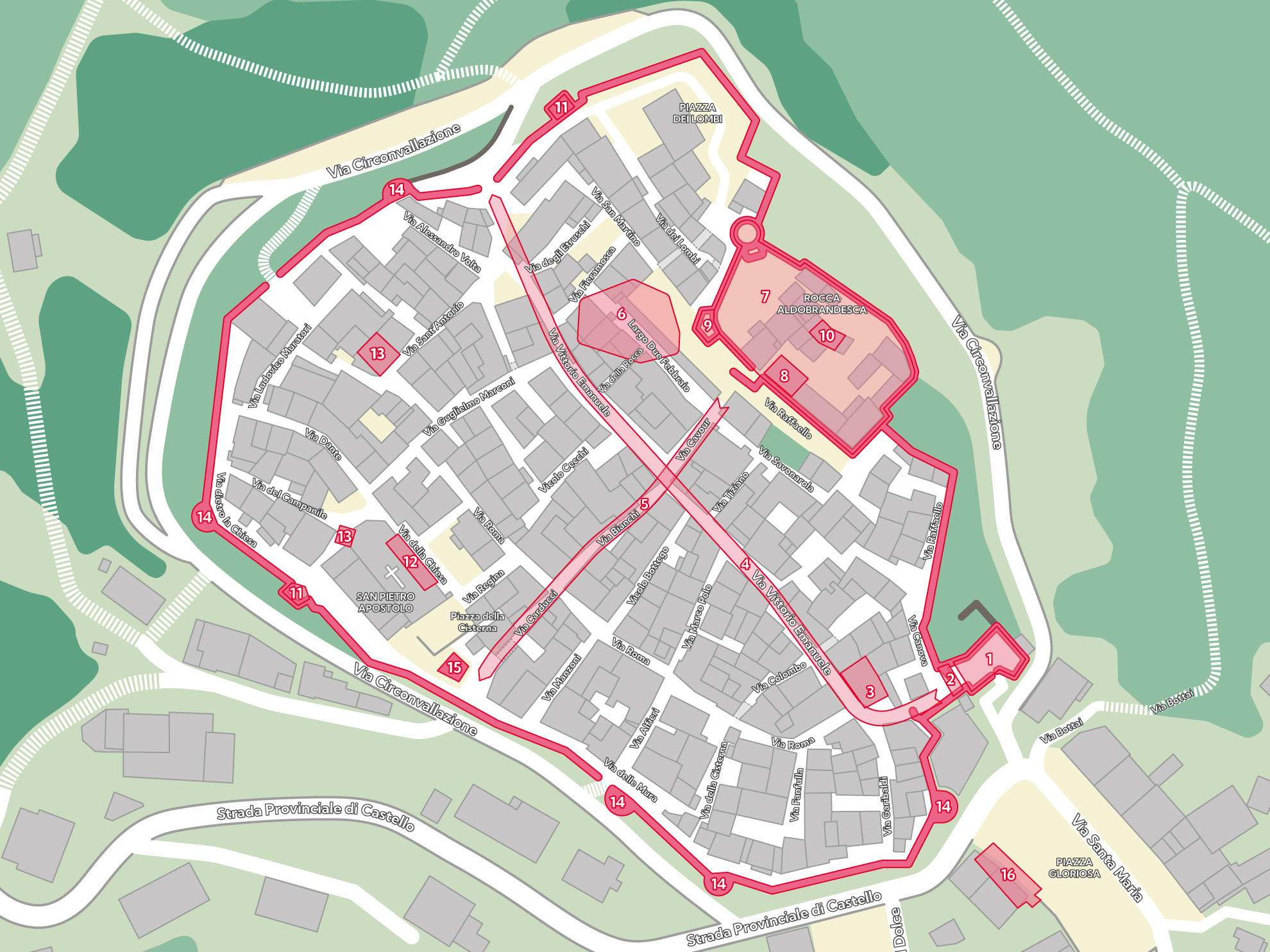
The extraction of contour lines with 1-m pace from the digital terrain model shows that the still well-preserved modern-age enclosure in fact follows the natural slope pattern almost entirely.
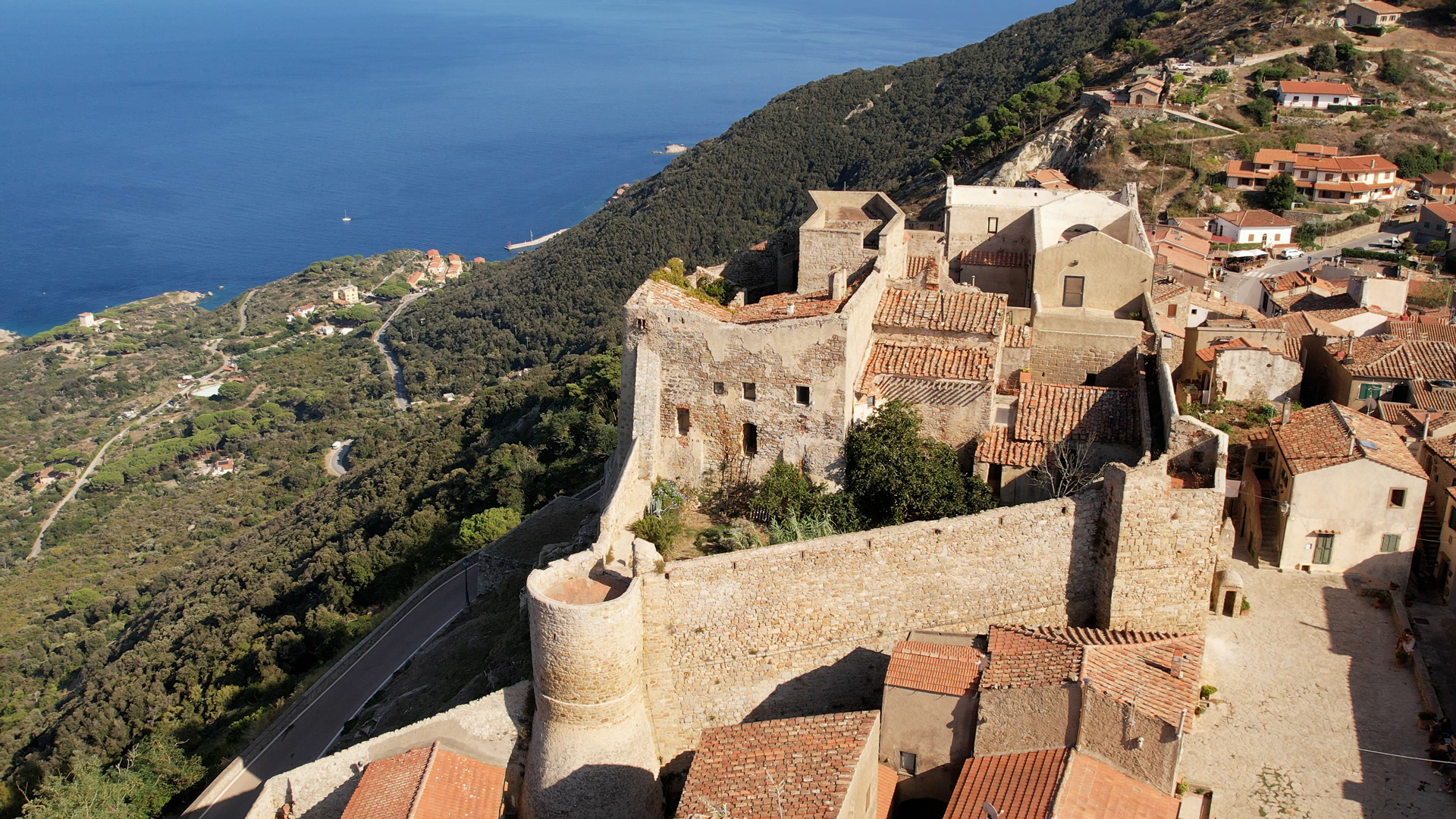
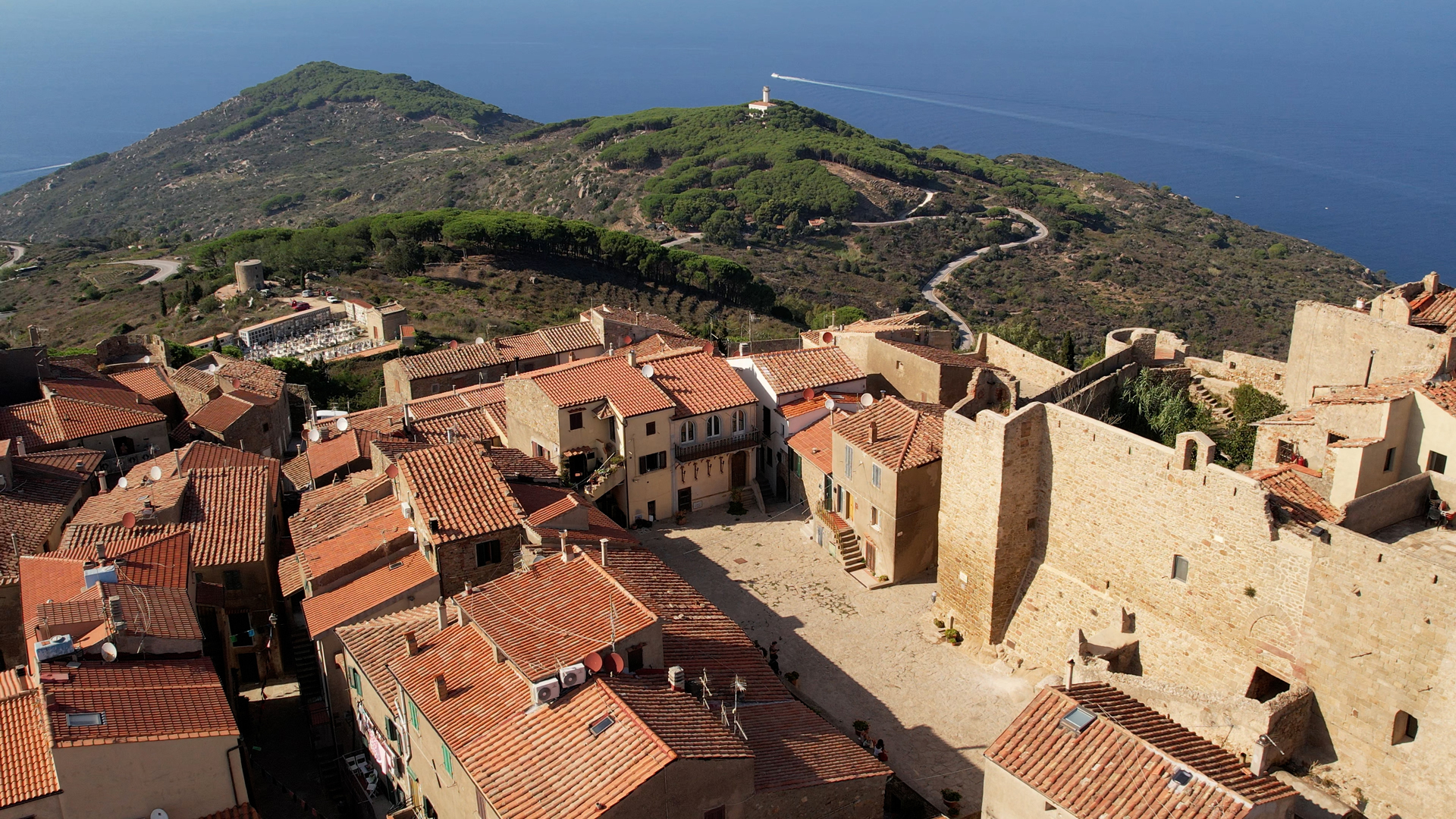
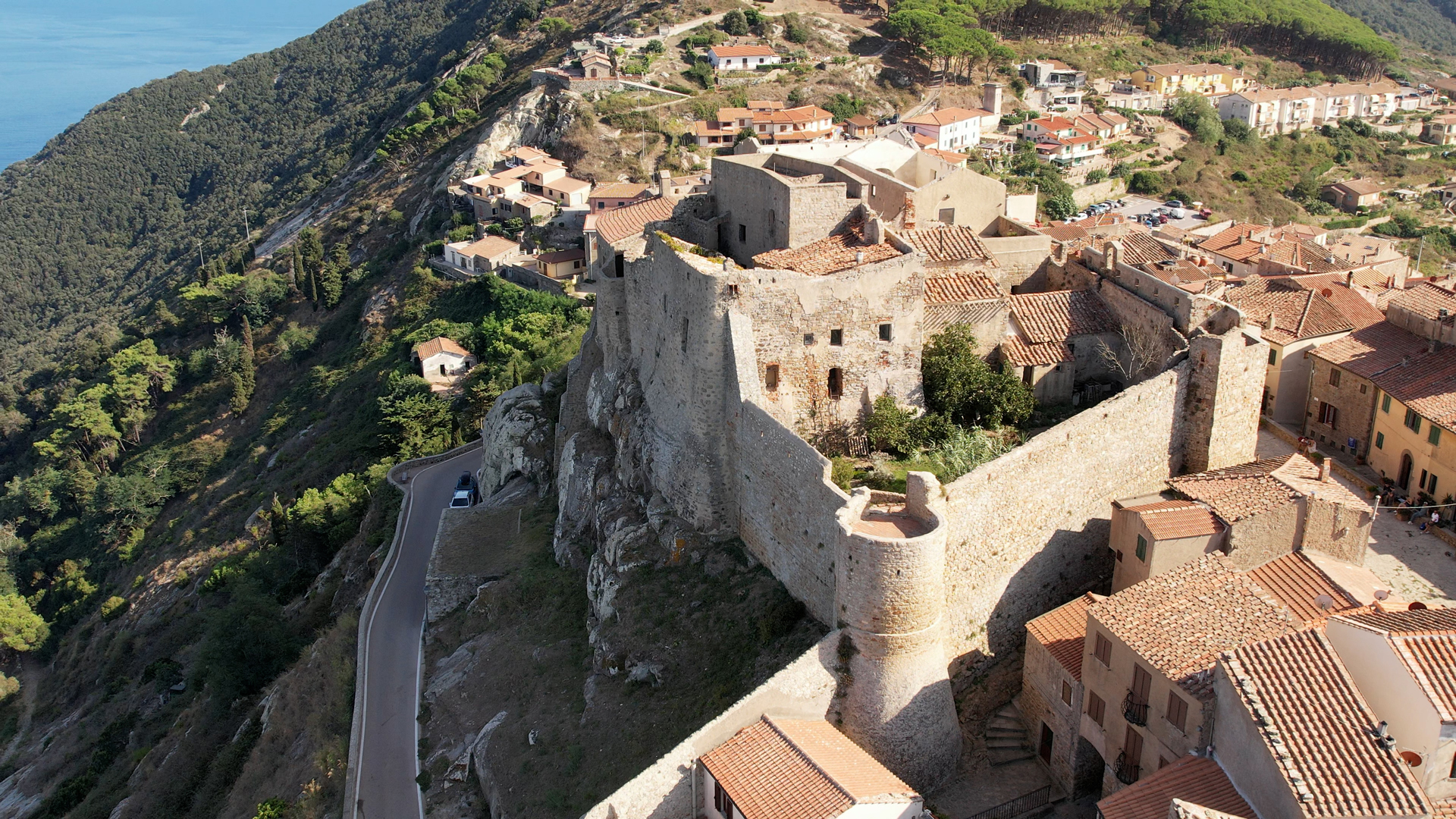
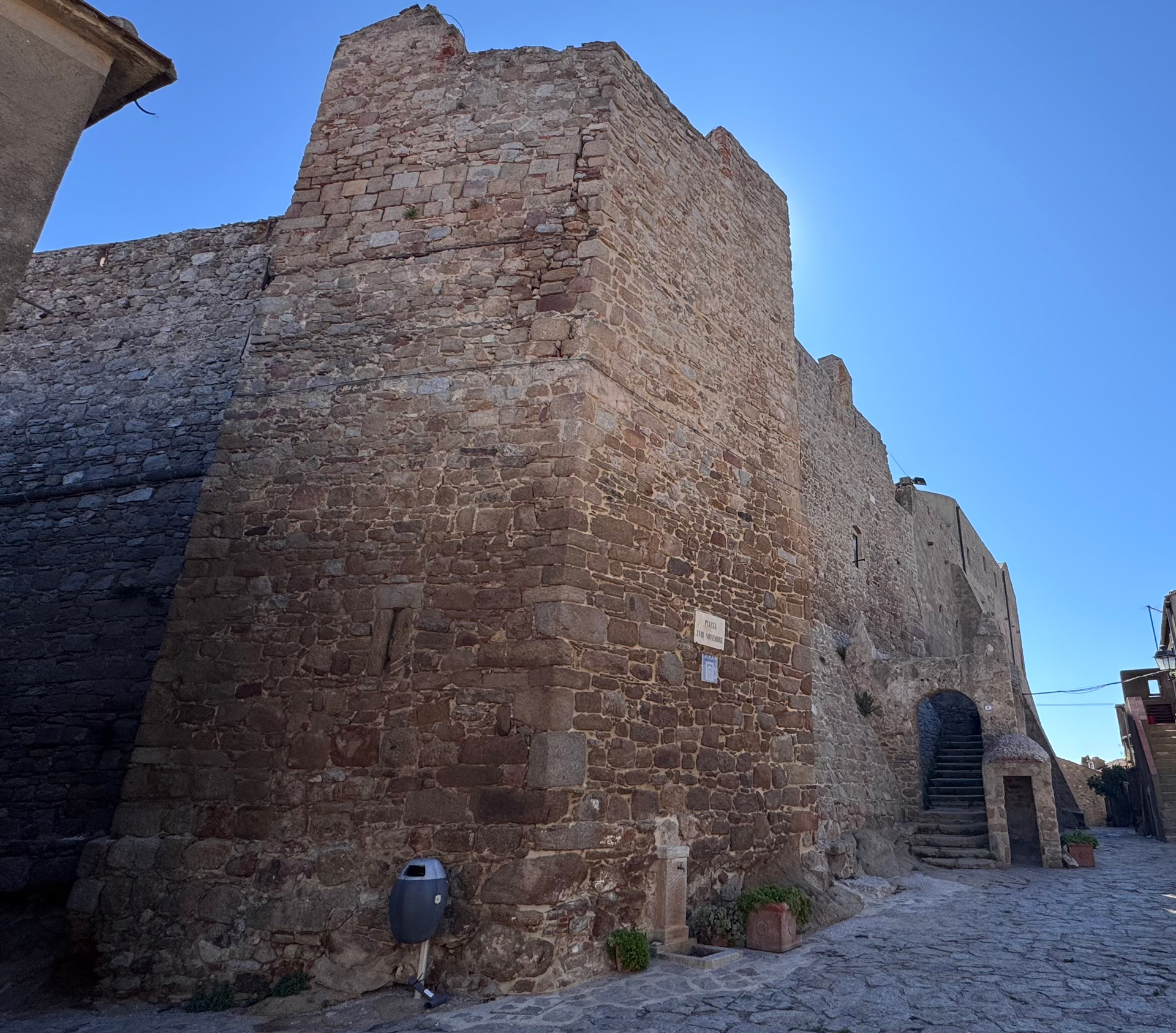
Along this circuit we have two towers (and perhaps a third that stands right on the side of the fortress) that are distinguished both by their shape (quadrangular while the others are semicircular) and by their texture, which features reused material and a texture that does not include bricks.
This suggests a construction phase that can be placed between the 14th and 15th centuries, at that rather delicate time in the island's history when there were several changes of ownership and several actors interested in having control.
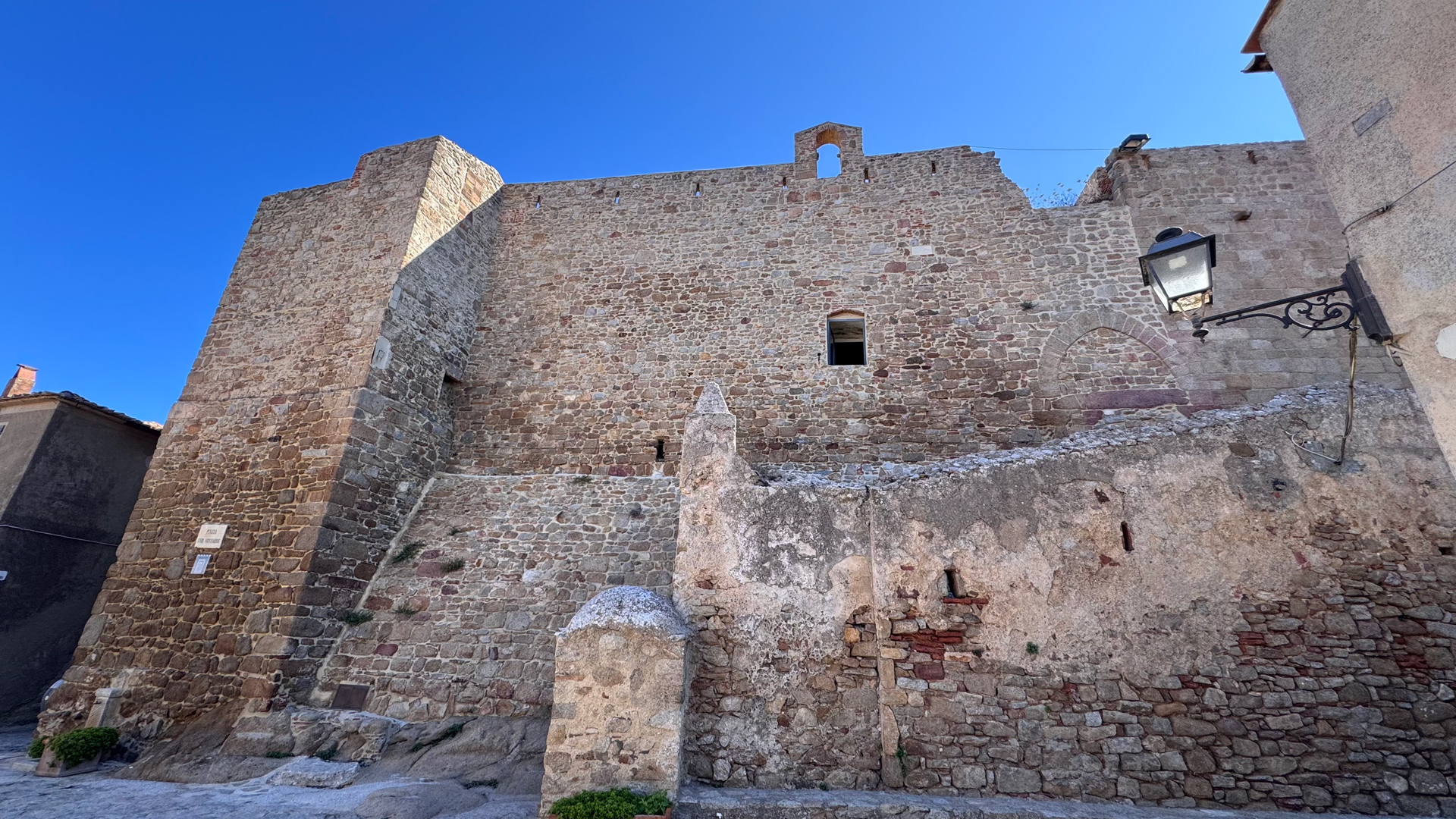
In particular, the strongholdarea, which in medieval castles is usually referred to as the keep, seems already structured in the form we see today.
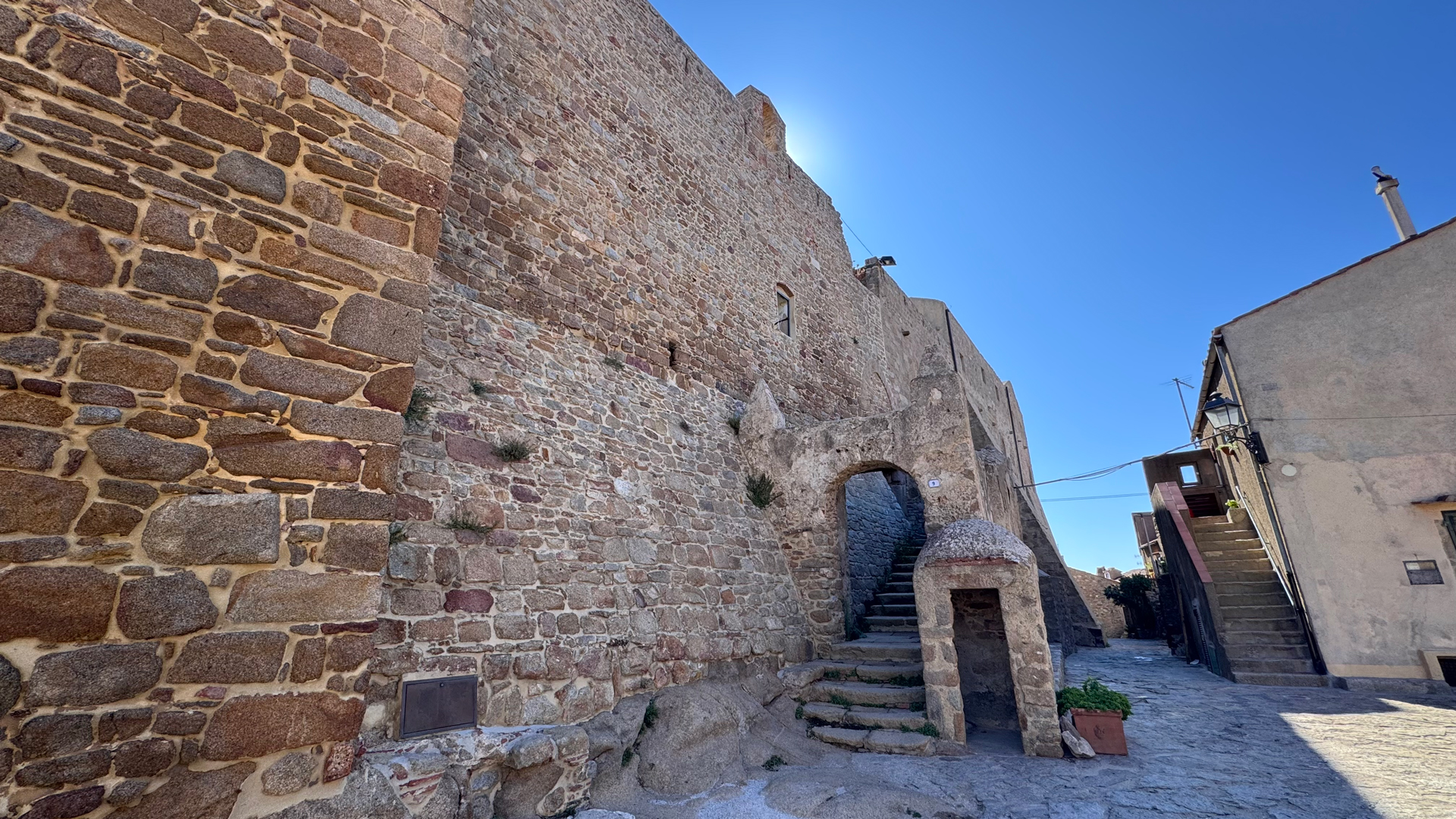
There are some elements that point in this direction. The first is part of the texture of the fortress wall especially to the north and east, the second is the Romanesque church (8) whose flank became part of the enclosure, and the third is the gateway with a pointed arch that may have been rearranged on site in the Renaissance reconstruction.
However, we lack elements on the organization of interior spaces in the Middle Ages, while we have some descriptions for the 17th and 18th century phases.
As with the rest of the castle, the Medici renovations of the top part seem to be characterized by a reconstruction with extensive use of reused material, adapting the forms and structures to the new requirements of defense from siege with cannons.
Restructuring/raising in the upper parts of the fortifications with distinctly different textures (smaller sized stones) and a fairly widespread use of brick wedges are evident in some places.