
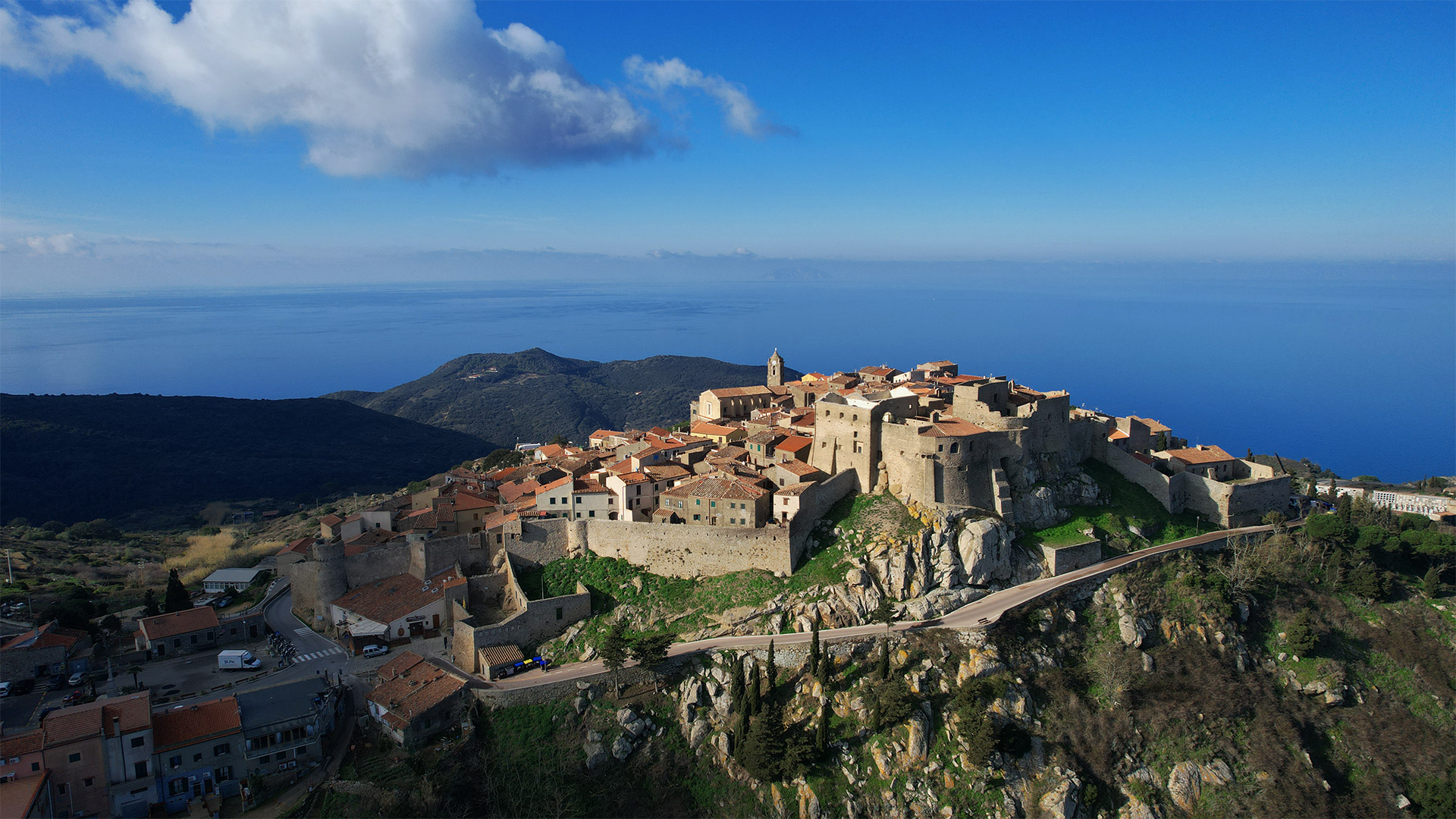
The island in the modern age between Medici and Lorraine
Modern Age
Home " The island of Giglio " Modern Age
Through various patrimonial events, the island underwent several changes of ownership between the mid-14th and mid-16th centuries, finally coming under the full control of the Medici who had just unified much of Tuscany under a single regional state (on recent history see Roani Villani 1993 and Begnotti 1999).
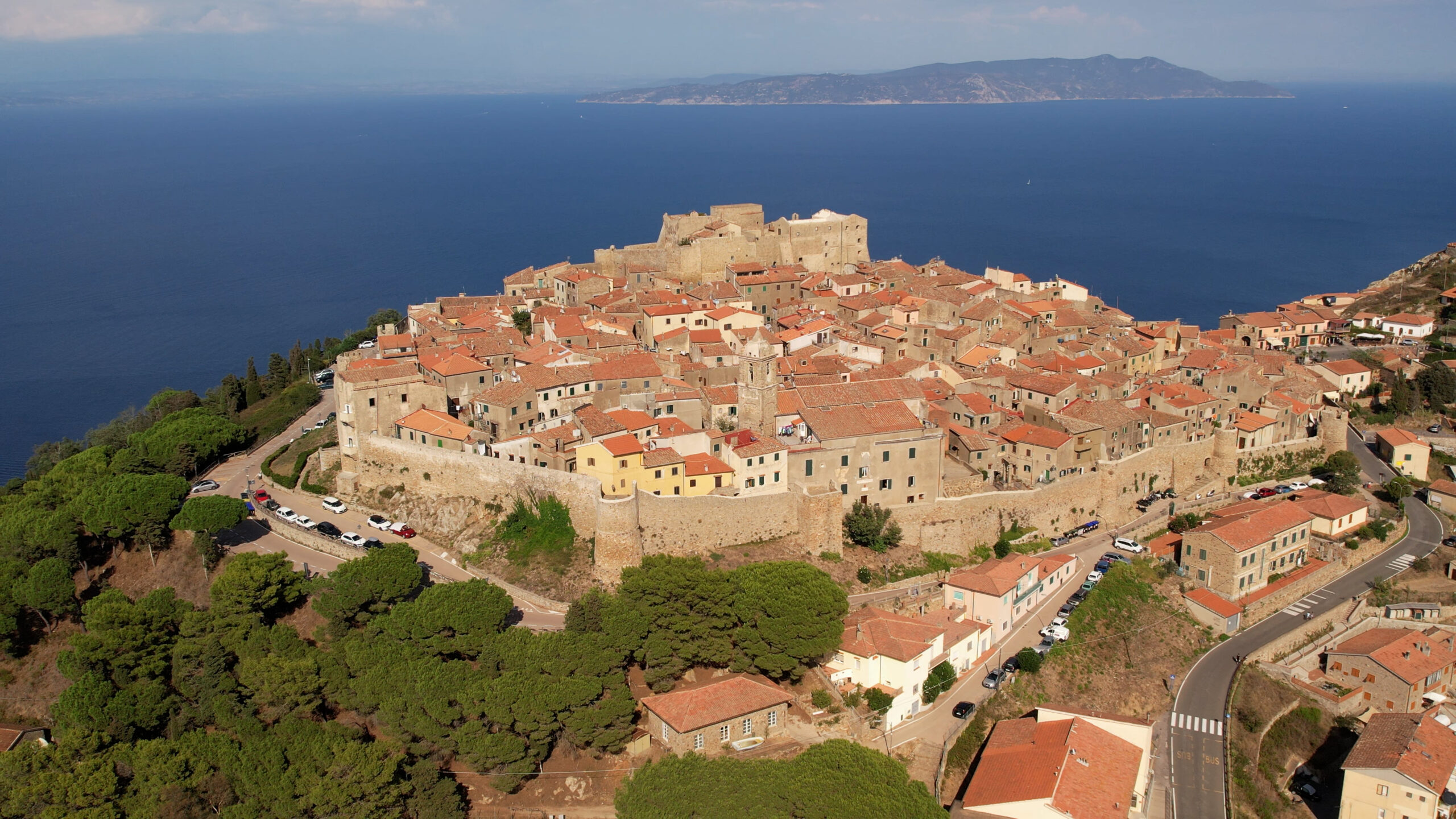
But apart from the affair of the so-called pirate Barbarossa, the sources show a situation of attention on the part of the authorities, which, however, was not followed by an adequate program of interventions on what had by then become the central place in terms of population and administrative management: the castle.
Another aspect of special significance for the island, precisely because of its detached location, is the construction of no less than two buildings with the function of a Lazaret.
The first was built starting in 1622, but after a few decades it was already in ruins due to the subsequent expansion of buildings of the same type in Livorno, by then the main port of Tuscany.
However, the construction of the second one will have to wait until 1769. We will see later in detail the fortified structure of the castle.
We can anticipate here that it was not isolated, but connected to a system of towers near two landings and other strategic points on the island such as Lazzeretto itself.
Thanks to some reports written by grand ducal officials, we have a very clear view of the situation on the island from at least the end of the 16th century.
In particular, Virginio Magi 's 1671 report (Roani Villani 1993, pp. 13ff.) provides some interesting insights.
First of all, that despite the not particularly favorable conditions, some cereals were grown on the island and especially good wine was produced, which even today is a special feature of the island'seconomy along with tourism.
The corsair expedition had a number of repercussions on the local population to the point that it was necessary toimport new inhabitants who obviously brought their own traditions with them.
In particular, the story of the so-called pirate Barbarossa is still very much alive in memory (Begnotti 1999, pp. 248-9, Mafrici 2003).
First, we should specify that the name of this important figure in the Mediterranean warfare was Khair-ed-Dyn; second, it was not him directly but Salah rais who flanked the Turkish fleet to besiege several strongholds on the Tuscan coast in 1544.
The traumatic event is often called upon to explain a significant break.
However, and we could take the Black Death of 1348 as an example as the Calabria earthquake of 1783, traumatic events have devastating effects on already very weak situations, while strong contexts show resilience.
Thus, the situation that is described at the end of the 16th century seems to us to be the result not of a single event, but of a trend that has its roots in the last centuries of the Middle Ages and that only more in-depth research can clarify.
However, it is undeniable that from the harbour to the castle, especially in the 18th century, numerous initiatives were undertaken to improve the defensive systems, livability, and landing on the island.