
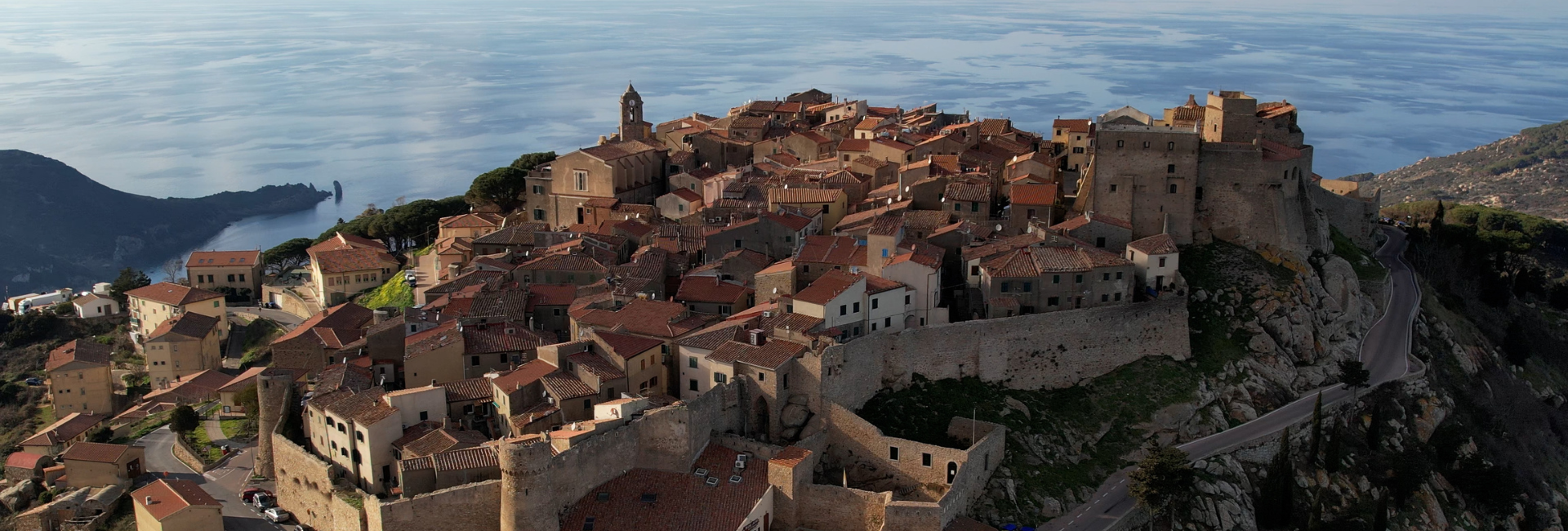
The island of Giglio
Prehistory and Protohistory
Home " The Island of Giglio " Prehistory and Protohistory
Although it was possible to reach the present-day island of Giglio from the mainland because the sea level was much lower, we have no Paleolithic evidence.
The earliest secure records are related to the Early Neolithic (ca. 6000-5500 B.C. - Brandaglia 2005).
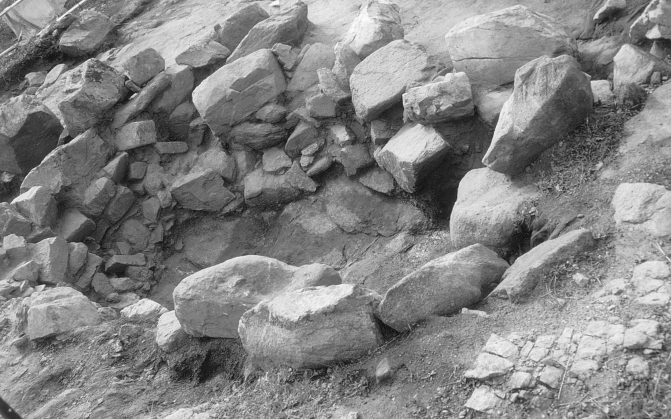
Other protohistoric evidence is found, although not always of clear location, in other areas of the island: at the Giglio Castello (Atlas 1992, sheet 142, site 7), Punta Arenella (Atlas 1992, sheet 142, site 5.1) and Grotta dell'Ortana (Atlas 1992, sheet 142, site 10). These data are to be placed in the broader context of the neolithization of the Tyrrhenian coast (Balducci 2007) around the middle of the 5th millennium B.C., and are evidence of an intense relationship between Sardinia, Corsica, the islands of the archipelago and the Tuscan coast.
More certain are the findings referable to the Bronze Age (ca. 2300-950 BC) and Iron Age (ca. 950-720 BC).
These records tell us that as early as the Bronze Age the key points of the island, namely the two main landings and some strategic high ground, were occupied by permanent settlements, while for the earlier period the records are more tenuous and therefore we cannot be certain that the human groups settled on the island already had a structured form.
In particular we have reports of a pyrite mine at Campese (Atlas 1992, sheet 142, site 6), at Castellare (Atlas 1992, sheet 142, site 8.1), at Porto (Atlas 1992, sheet 142, site 9.1), Castellare del Porto (Atlas 1992, sheet 142, site 12.1), Pitocci (Atlas 1992, sheet 142, site 13), Le Porte (Atlas 1992, sheet 142, site 14), Poggio della Pagana and Castelluccio which are the two main sites on the heights (Atlas 1992, sheet 142, sites 16, 17, 20, 22), Torricella (Atlas 1992, sheet 142, site 23), Mortoleto (Atlas 1992, sheet 142, site 24).
So we can say that the intensification of finds is in itself a clear indicator of the increased presence on the island even with stable sites and thus a greater structuring of the network and exploitation of resources.
The connection between coast and islands is thus further intensified.